Marty’s photo of the day #4983: It’s lunchtime for a young Galapagos sea lion. Worldwide, there are six species of sea lions, and of those, the Galapagos sea lions are the smallest. Females average 200 pounds; males average 550 pounds. (Photographed last month in the Galapagos Islands.)
You are browsing archives for
Category: Little-Known Facts
Finescale Triggerfish
Marty’s photo of the day #4979: This is a finescale triggerfish. They can swim forward, backward, or hover by rippling their dorsal and anal fins. They have 8 strong teeth in each jaw, allowing them to crush sea urchins, crustaceans, and mollusks. Their teeth grow throughout their lives, requiring them to chew hard materials to […]
Galapagos Island Snakes
I never expected to see snakes on the Galapagos Islands. In fact, one book I read before the trip said the islands had a few small snakes but seeing them was extremely rare. As I’ve learned during my travels, I seldom find snakes when looking for them and often find them when I’m not. Consequently, […]
No Fear
Marty’s photo of the day #4978: The Galapagos Islands reminded me of my visit to Antarctica, because the wildlife of both places have no fear of humans. I was sitting on a beach when this yellow warbler approached within inches of me. (Photographed last month in the Galapagos Islands.)
Tortoise Faces
Marty’s photo of the day #4972: Earlier this month, Deb and I spent the night in a treehouse along the migration route of the Galapagos tortoises (also known as giant tortoises) on Santa Cruz island. Their migration from the humid highlands to the dry lowlands is only about five miles, but that’s quite a feat […]
The Pacific Leopard Flounder
Marty’s photo of the day #4971: Look closely. The lighter-colored center of this photo is a pacific leopard flounder! At about 15 inches full-grown, these fish can instantly change their color and pattern to match sandy or rocky seafloors and can even become nearly translucent in open water. They start life with eyes on both […]
Land Iguanas of the Galapagos Islands
Marty’s photo of the day #4969: The Galapagos Islands have land iguanas and marine iguanas. Both evolved from a common ancestor some 8 million years ago. This is a land iguana, of which there are 3 distinct species. With a lifespan of up to 60 years, they primarily eat prickly pear cactus pads, flowers, and […]
Massive Schools of Fish
Marty’s photo of the day #4968: While the Galapagos Islands didn’t have the underwater species diversity of other places I’ve snorkeled, it made up for less diversity by producing massive schools of fish. Of my many “wall of fish” experiences there, this one with razor surgeonfish was the most beautiful. (Photographed earlier this month in […]
Darwin’s Finches
Marty’s photo of the day #4967: Normally, I wouldn’t go out of my way to photograph finches, but on the Galapagos Islands, Darwin’s finches (more closely related to tanagers than true finches) are special because they helped Charles Darwin formulate his theory of evolution by natural selection. There are 13 to 18 recognized species (depending […]
The Rareest Penguins in the World
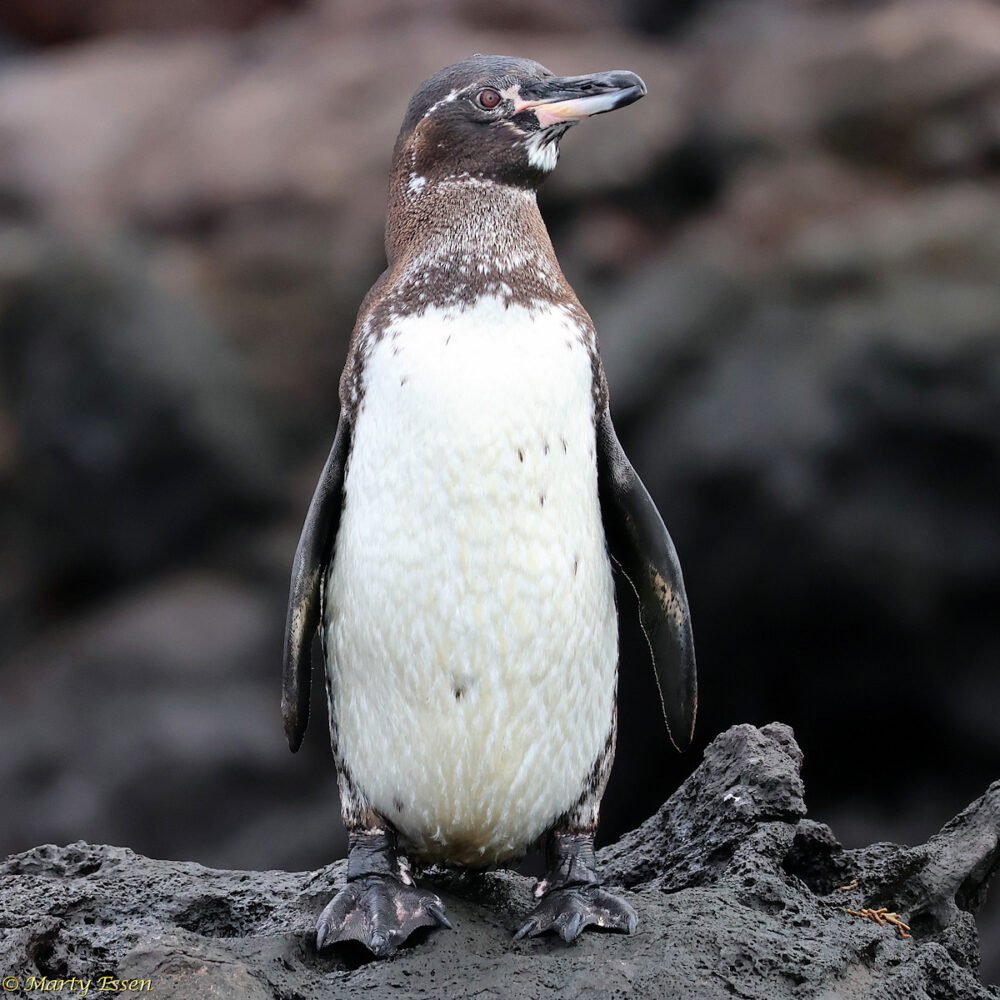
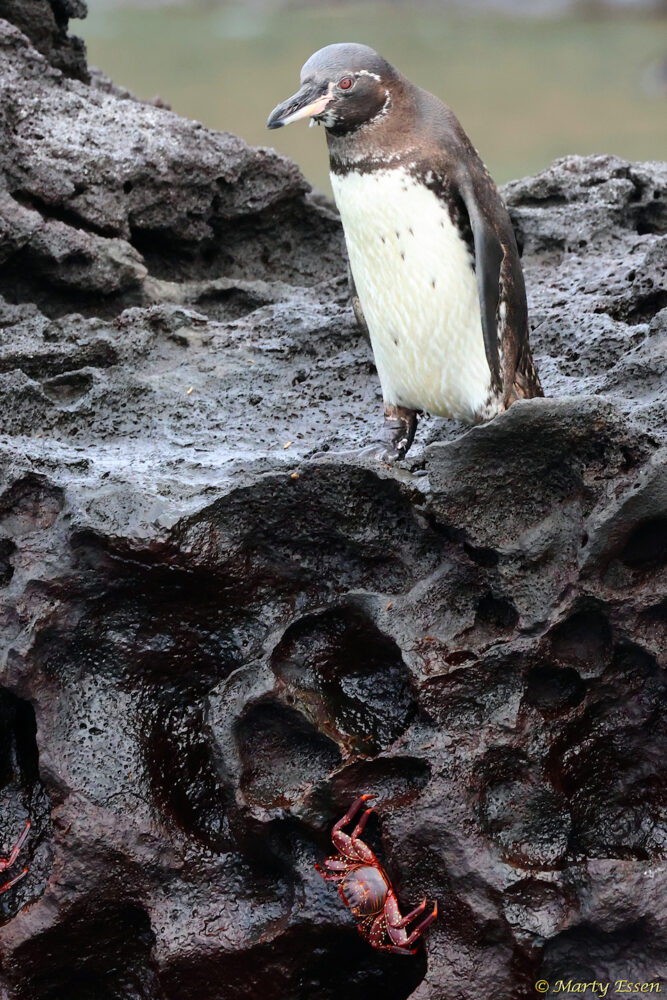
Marty’s photo of the day #4966: The Galapagos penguins are squawking that I haven’t featured them for a photo of the day yet. So here we go. These are the rarest penguins in the world (less than 2,000 exist) and the only penguin species that lives in the tropics and north of the equator. To […]
In Your Face Fish
Marty’s photo of the day #4963: During the past ten years, I’ve snorkeled the Sea of Cortez, Bonaire, Belize, the Raja Ampat of Indonesian New Guinea, and the Galapagos Islands. All had interesting and unique features. Where the Galapagos Islands excelled was in the massive schools of fish that were close enough to touch. These […]
Like the Lava Lizards of the Galapagos Islands
Marty’s photo of the day #4962: Annie: “Now, I want you to breathe through your eyelids.” Nuke: “My eyelids?” Annie: “Yeah, like the lava lizards of the Galapagos Islands. See, there are some lizards that have a parietal eye behind their heads so they can see backwards. Haven’t you ever noticed how Fernando Valenzuela, he […]
Making More Green Sea Turtles
Marty’s photo of the day #4961: So, I shot green sea turtle porn while visiting the Galapagos Islands. Copulation can take several hours, with the female supporting the male’s weight and swimming to the surface for air. She’ll mate with multiple males over a two-week period and store their sperm for several months to fertilize […]
Large-Banded Blenny
Marty’s photo of the day #4960: When it comes to underwater photography, one advantage the Galapagos Islands has over locations with coral reefs is that its lack of coral entices many interesting and colorful fish to hang out among the volcanic rocks near the surface. That advantage allowed me to get very close to this […]
The Unique Faces of Galapagos Tortoises
Marty’s photo of the day #4959: Deb and I spent the night in a treehouse along the migration route of the Galapagos tortoises (also known as giant tortoises) on Santa Cruz island. Their migration from the humid highlands to the dry lowlands is only about five miles, but that’s quite a feat for these huge […]
Raja Ampat vs. the Galapagos Islands
Eventually I will get to more spectacular underwater photos, but I think this shot demonstrates the difference between what I had been posting previously from the Raja Ampat of Indonesian New Guinea and what I will be posting in the coming weeks from the Galapagos Islands. The Raja Ampat has incredible coral reefs that the […]
Christmas Tree Iguanas
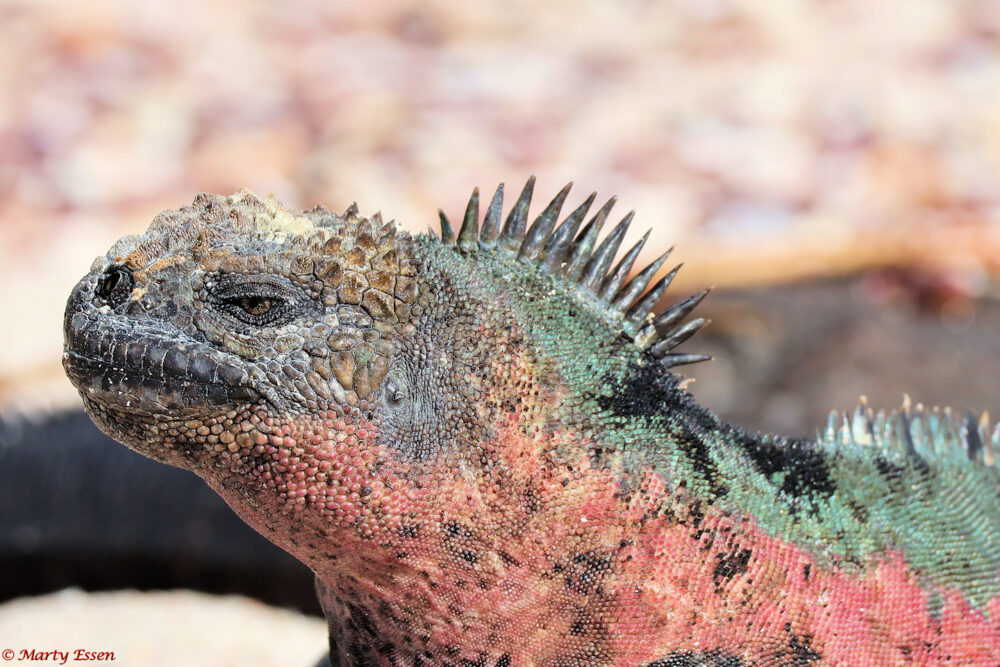
Marty’s photo of the day #4958: You are looking at Christmas tree marine iguanas (also known as Española marine iguanas) making more Christmas tree marine iguanas. These lizards are a subspecies found only on Española island. While most marine iguanas are black to absorb sun heat, the males on Española turn brilliant red and green […]
Fledgling Galapagos Albatross
Marty’s photo of the day #4957: This is a fledgling Galapagos albatross (also known as a waved albatross). When full-grown, these critically endangered birds have a wingspan of up to eight feet. And they look a lot prettier, too! This albatross isn’t yet ready to fly, but when it does, it will stay at sea […]
More Feather Stars
Marty’s photo of the day #4954: These are feather stars. Despite their plant-like appearance, they are a free-swimming animals related to sea stars and sea urchins. They use their feathery arms to filter food from ocean currents and can crawl or swim by undulating their arms. (Photographed in the Raja Ampat of Indonesian New Guinea.)
The Versatile Longfin Emperor
Marty’s photo of the day #4952: This is a longfin emperor. These fish can shift their coloration from a pale to dark depending on their mood. They also start out as female before becoming male. (Photographed in the Raja Ampat of Indonesian New Guinea.)