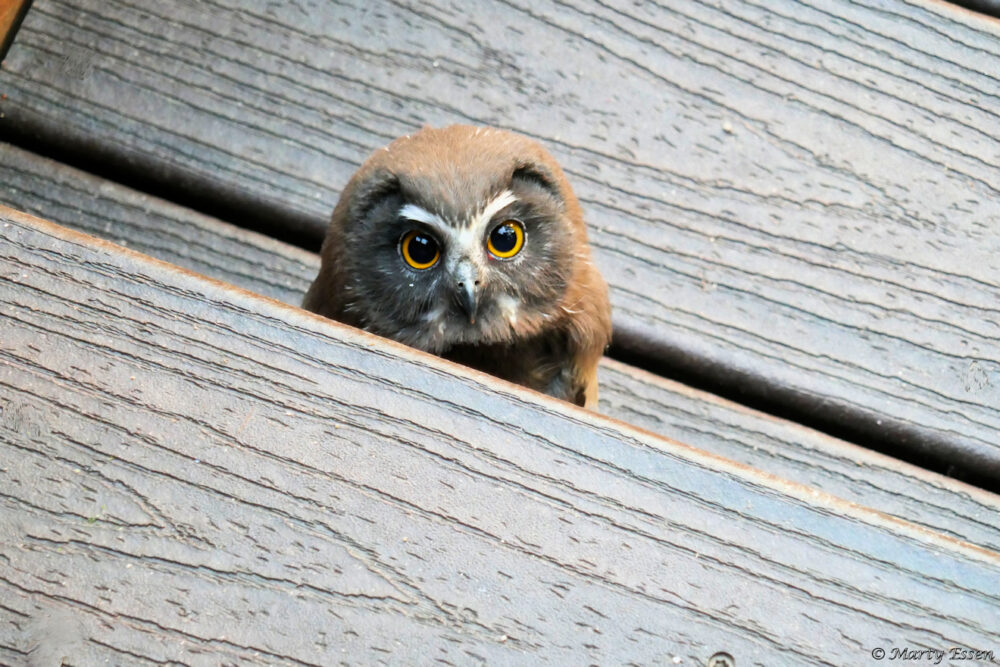
Five years ago, the cutest little saw-whet owl showed up on the porch steps of Deb’s and my house. I shot a bunch of photos, including this one. Since that time, I’ve never seen more than a glimpse of a saw-whet owl on our property. But I sure have heard them! In fact, every night […]
You are browsing archives for
Category: Little-Known Facts
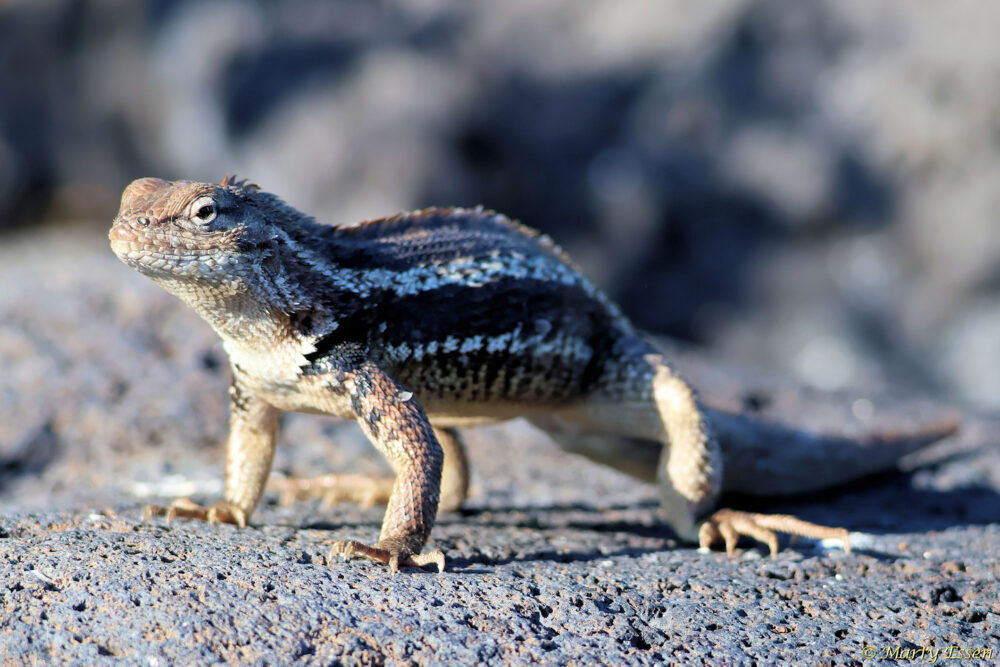
Push-ups for Defense
Marty’s photo of the day #4999: San Cristobal lava lizard males defend their territories by performing rapid push-ups to warn their rivals. If their displays fail, they will engage in physical combat. And despite what Annie Savoy said to Nuke Laloosh in the movie Bull Durham, the lava lizards of the Galapagos Islands cannot breathe […]
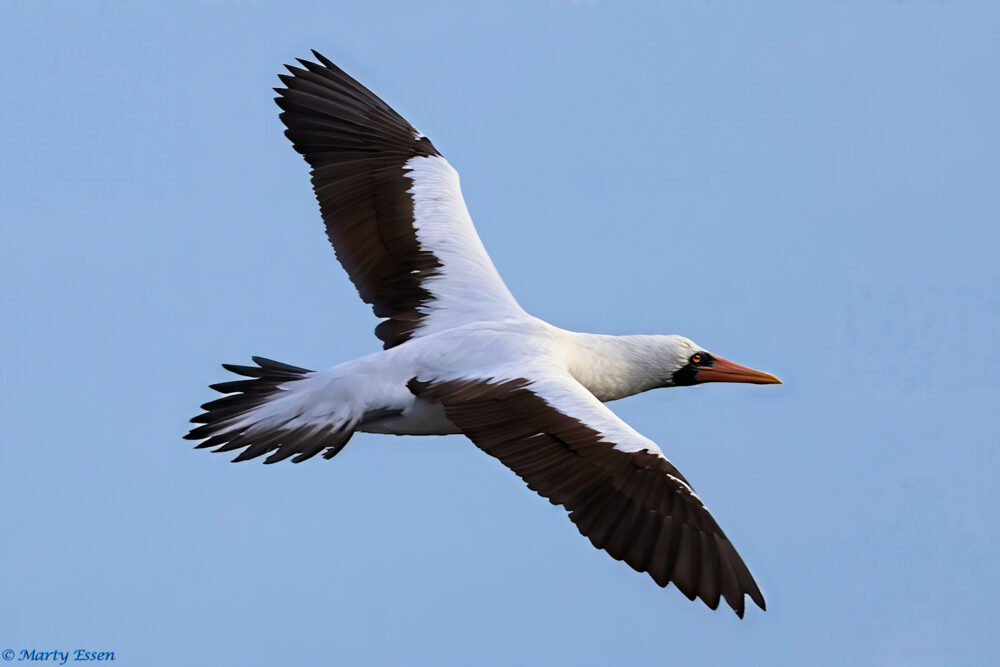
Photographing a Nazca Booby in Flight
Marty’s photo of the day #4998: Photographing a Nazca booby in flight is tricky. They are agile in the air, cruising at 25 miles-per-hour and diving at 60 miles-per-hour. Ultimately, I ended up deleting many photos of the empty sky. (Photographed last month in the Galapagos Islands.)
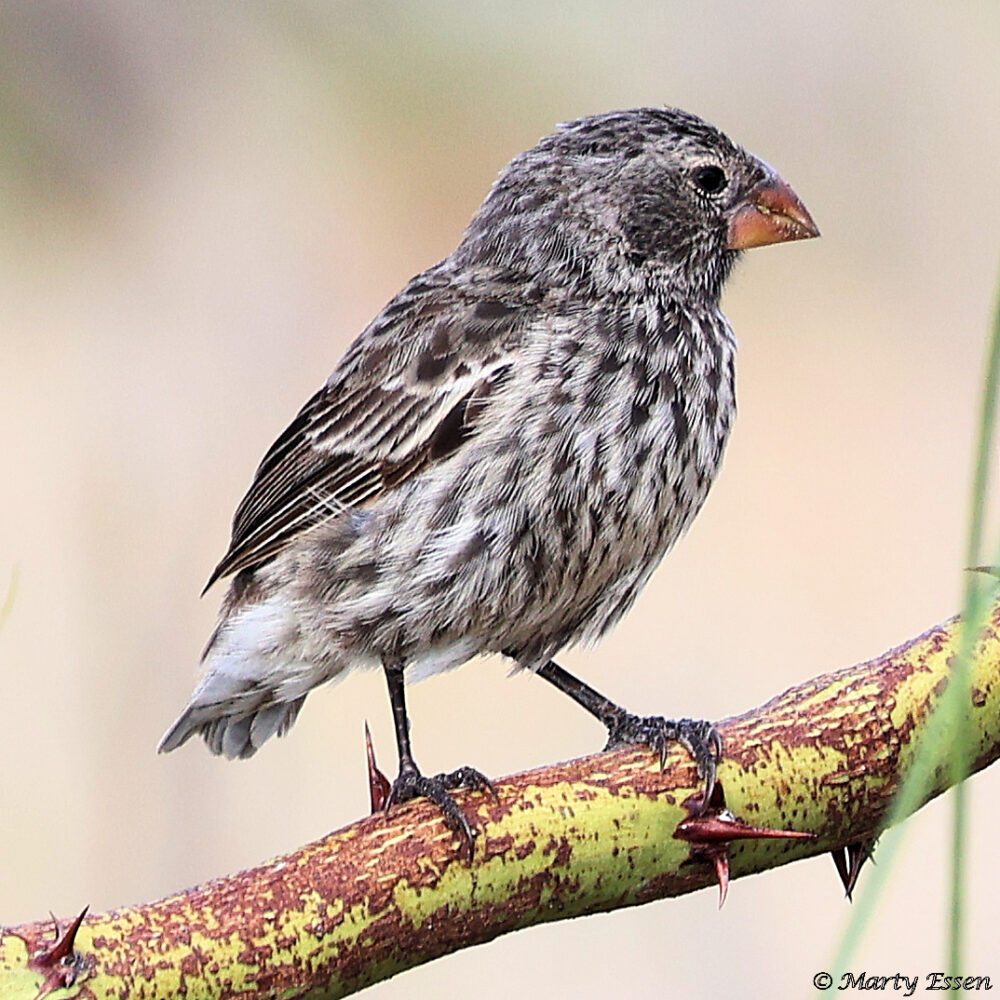
Darwin’s Finches
Marty’s photo of the day #4997: On the Galapagos Islands, Darwin’s finches (more closely related to tanagers than true finches) are special because they helped Charles Darwin formulate his theory of evolution by natural selection. There are 13 to 18 recognized species (depending on who’s counting) on the islands, with the key differences being the […]
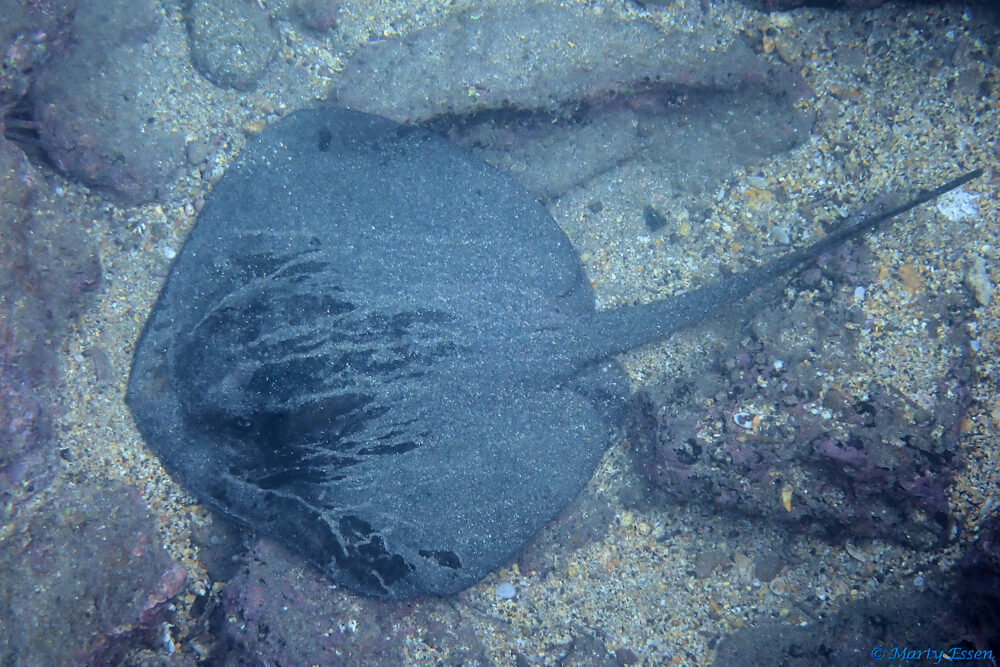
Marbled Ray
Marty’s photo of the day #4990: Marbled rays are nocturnal hunters that can reach 10 feet in length and 6 feet in width. While generally non-aggressive, they possess a venomous tail spine for defense. They are protected within the Galapagos Marine Reserve. (Photographed last month in the Galapagos Islands.)
Blue-Foot Boobies
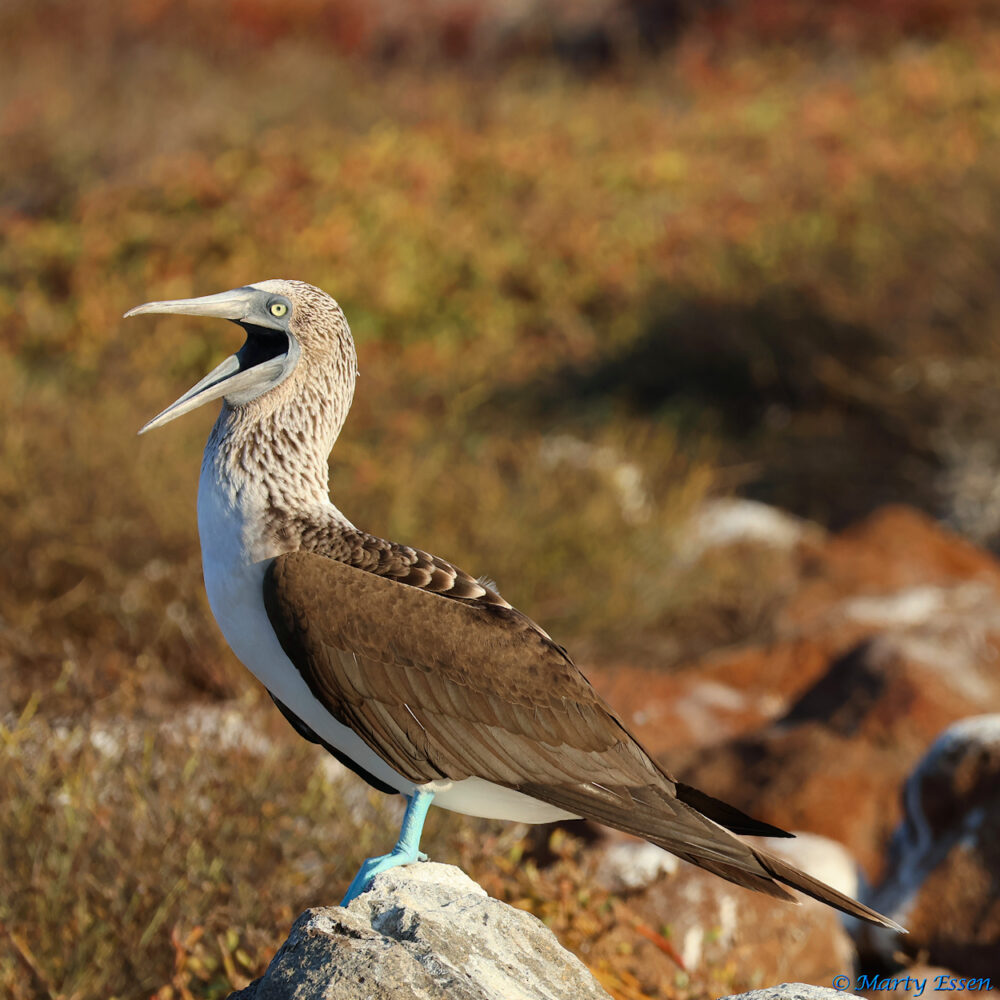
Marty’s photo of the day #4989: Blue-footed boobies are accomplished divers that plunge into the ocean, reaching speeds of sixty miles-per-hour to catch fish. The blue in their feet comes from carotenoid pigments in their diet, signaling health to potential mates. (Photographed last month in the Galapagos Islands.)
Another Hood Mockingbird Image
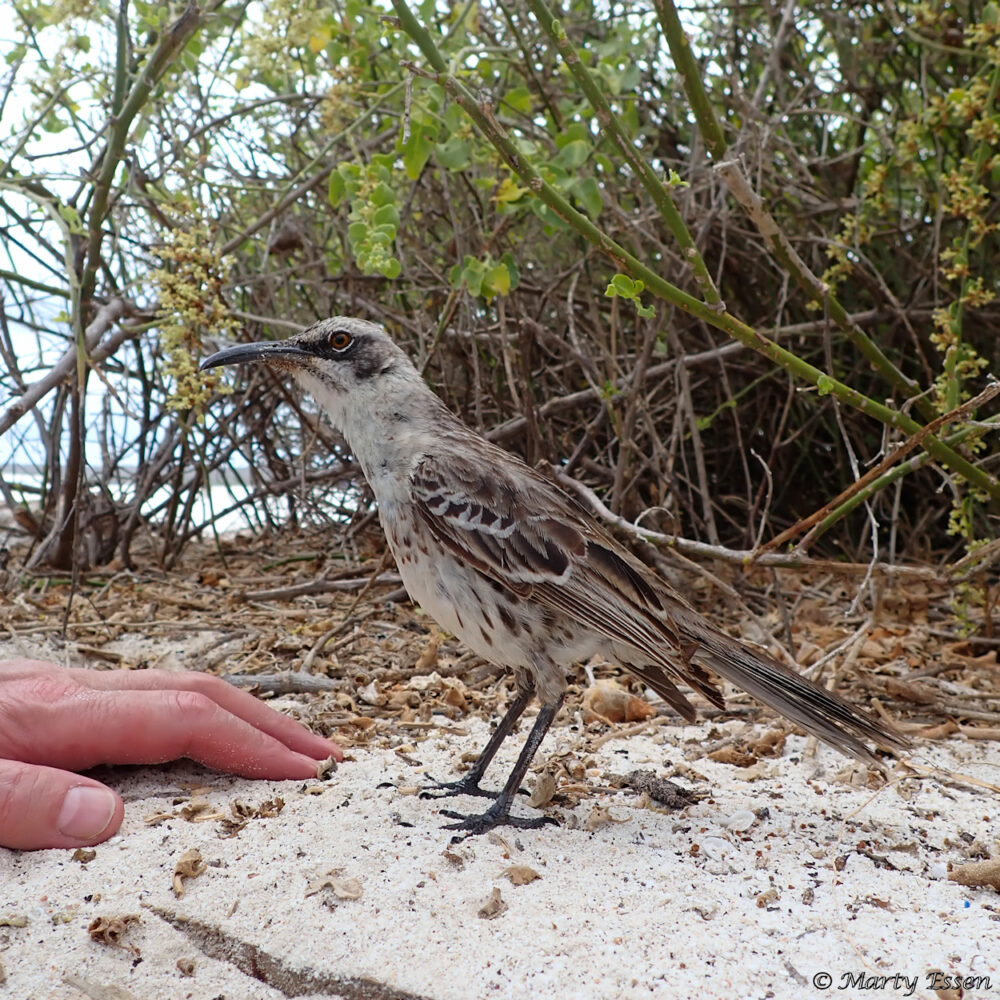
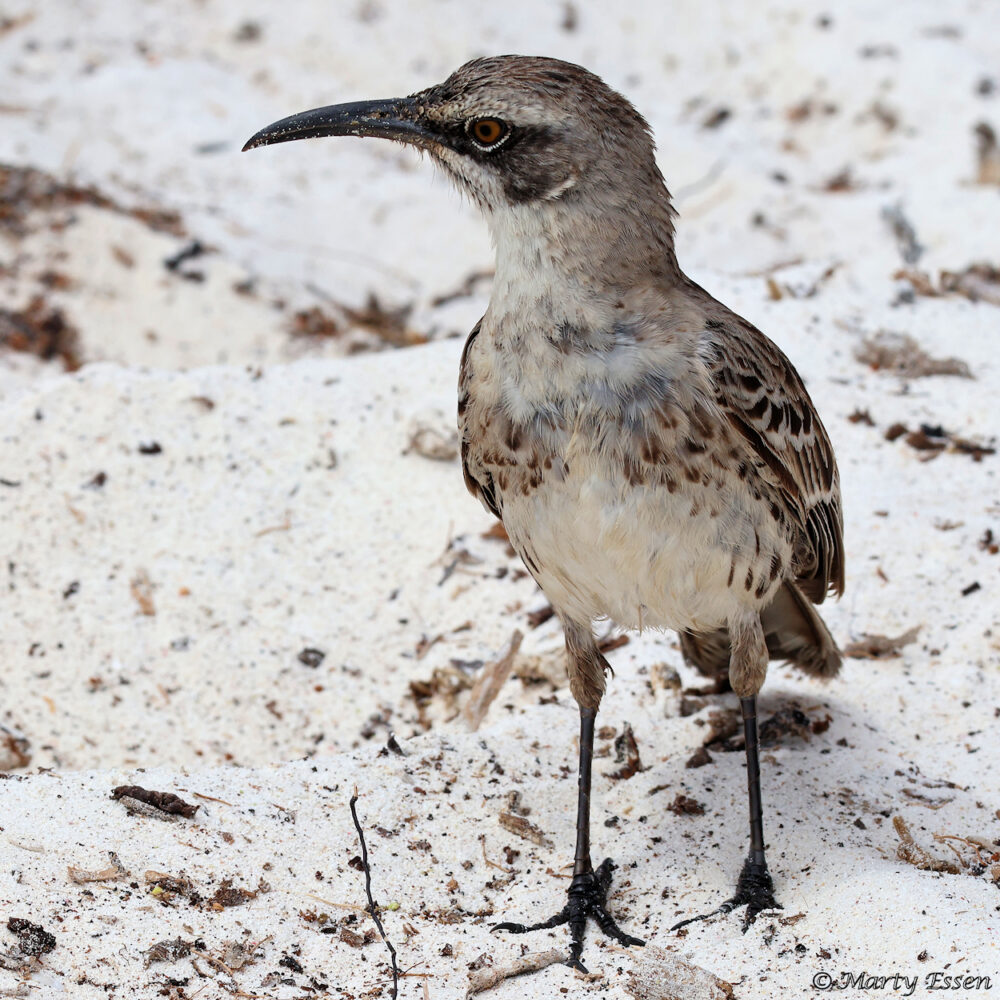
After posting a different Hood mockingbird image as today’s photo of the day, I came across this shot, which I like even more. These mockingbirds are found only on Española Island (previously called Hood Island). They live in social groups where the lower-ranking members help raise the young of the dominant pair. That’s my hand […]
Hood Mockingbird
Marty’s photo of the day #4988: Hood mockingbirds are found only on Española Island. They live in social groups where the lower-ranking members help raise the young of the dominant pair. And as this photo shot without using a zoom demonstrates: they have no fear of humans. (Photographed last month in the Galapagos Islands.)
Pacific Burrfish
Marty’s photo of the day #4987: This is a Pacific burrfish. Unlike pufferfish which have spines that lay flat, Pacific burrfish have short, thick, immovable spines that stick out all the time. And when threatened, they can rapidly swallow water to inflate their body, doubling their size. (Photographed last month in the Galapagos Islands.)
White-Cheeked Pintail Ducks
Marty’s photo of the day #4986: I photographed these white-cheeked pintail ducks as they were hanging out at a waterhole with Galapagos tortoises. These unique ducks are found in the Galápagos Islands, the Caribbean, and South America. Unlike many other duck species, males and females look alike, and they are adapted to brackish water, often […]
Sally Lightfoot Crab
Marty’s photo of the day #4985: Supposedly, Sally Lightfoot crabs are named after a Caribbean dancer because of their nimble, light-footed movements. The actual human Sally Lightfoot is unknown. The crabs can squirt streams of water from their shells at attackers, and if they lose a leg, claw, or eye, they can regenerate another during […]
Feeding Time
Marty’s photo of the day #4983: It’s lunchtime for a young Galapagos sea lion. Worldwide, there are six species of sea lions, and of those, the Galapagos sea lions are the smallest. Females average 200 pounds; males average 550 pounds. (Photographed last month in the Galapagos Islands.)
Finescale Triggerfish
Marty’s photo of the day #4979: This is a finescale triggerfish. They can swim forward, backward, or hover by rippling their dorsal and anal fins. They have 8 strong teeth in each jaw, allowing them to crush sea urchins, crustaceans, and mollusks. Their teeth grow throughout their lives, requiring them to chew hard materials to […]
Galapagos Island Snakes
I never expected to see snakes on the Galapagos Islands. In fact, one book I read before the trip said the islands had a few small snakes but seeing them was extremely rare. As I’ve learned during my travels, I seldom find snakes when looking for them and often find them when I’m not. Consequently, […]
No Fear
Marty’s photo of the day #4978: The Galapagos Islands reminded me of my visit to Antarctica, because the wildlife of both places have no fear of humans. I was sitting on a beach when this yellow warbler approached within inches of me. (Photographed last month in the Galapagos Islands.)
Tortoise Faces
Marty’s photo of the day #4972: Earlier this month, Deb and I spent the night in a treehouse along the migration route of the Galapagos tortoises (also known as giant tortoises) on Santa Cruz island. Their migration from the humid highlands to the dry lowlands is only about five miles, but that’s quite a feat […]
The Pacific Leopard Flounder
Marty’s photo of the day #4971: Look closely. The lighter-colored center of this photo is a pacific leopard flounder! At about 15 inches full-grown, these fish can instantly change their color and pattern to match sandy or rocky seafloors and can even become nearly translucent in open water. They start life with eyes on both […]
Land Iguanas of the Galapagos Islands
Marty’s photo of the day #4969: The Galapagos Islands have land iguanas and marine iguanas. Both evolved from a common ancestor some 8 million years ago. This is a land iguana, of which there are 3 distinct species. With a lifespan of up to 60 years, they primarily eat prickly pear cactus pads, flowers, and […]
Massive Schools of Fish
Marty’s photo of the day #4968: While the Galapagos Islands didn’t have the underwater species diversity of other places I’ve snorkeled, it made up for less diversity by producing massive schools of fish. Of my many “wall of fish” experiences there, this one with razor surgeonfish was the most beautiful. (Photographed earlier this month in […]
Darwin’s Finches
Marty’s photo of the day #4967: Normally, I wouldn’t go out of my way to photograph finches, but on the Galapagos Islands, Darwin’s finches (more closely related to tanagers than true finches) are special because they helped Charles Darwin formulate his theory of evolution by natural selection. There are 13 to 18 recognized species (depending […]