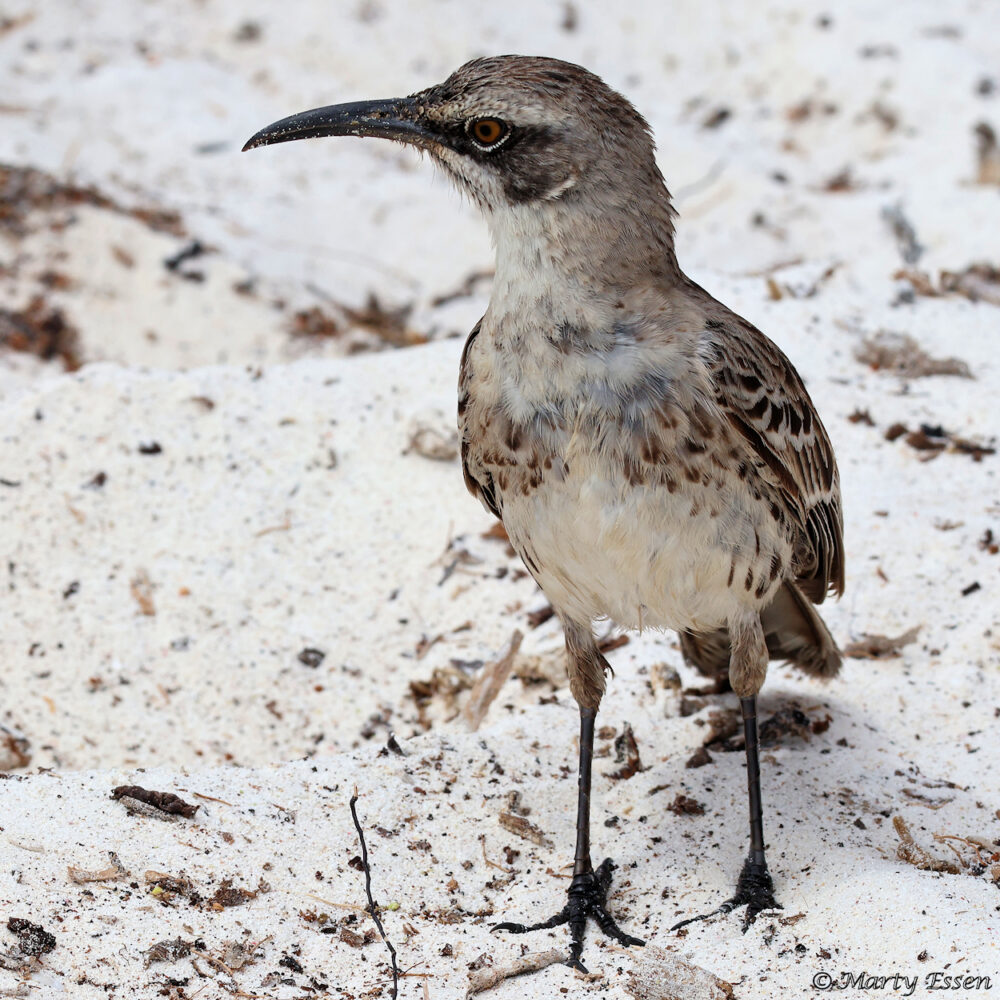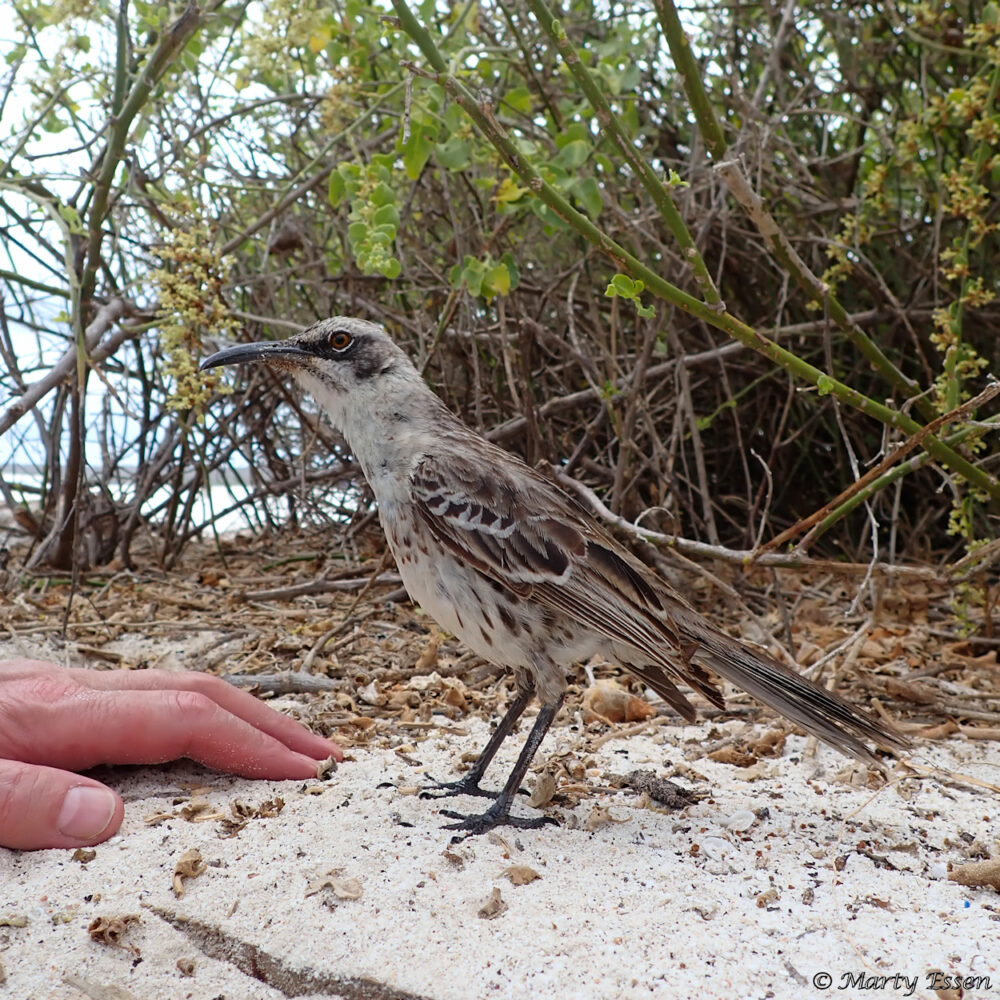
Hood Mockingbird

Hood Mockingbird

Marty’s photo of the day #4988: Hood mockingbirds are found only on Española Island. They live in social groups where the lower-ranking members help raise the young of the dominant pair. And as this photo shot without using a zoom demonstrates: they have no fear of humans. (Photographed last month in the Galapagos Islands.)

Pacific Burrfish

Pacific Burrfish

Marty’s photo of the day #4987: This is a Pacific burrfish. Unlike pufferfish which have spines that lay flat, Pacific burrfish have short, thick, immovable spines that stick out all the time. And when threatened, they can rapidly swallow water to inflate their body, doubling their size. (Photographed last month in the Galapagos Islands.)

White-Cheeked Pintail Ducks

White-Cheeked Pintail Ducks

Marty’s photo of the day #4986: I photographed these white-cheeked pintail ducks as they were hanging out at a waterhole with Galapagos tortoises. These unique ducks are found in the Galápagos Islands, the Caribbean, and South America. Unlike many other duck species, males and females look alike, and they are adapted to brackish water, often […]

Sally Lightfoot Crab

Sally Lightfoot Crab

Marty’s photo of the day #4985: Supposedly, Sally Lightfoot crabs are named after a Caribbean dancer because of their nimble, light-footed movements. The actual human Sally Lightfoot is unknown. The crabs can squirt streams of water from their shells at attackers, and if they lose a leg, claw, or eye, they can regenerate another during […]

Sticking a Neck Out

Sticking a Neck Out

During the past few weeks, I’ve concentrated on wildlife that is unique to the Galapagos Islands. Great blue herons aren’t unique to the islands, but I’ve never seen one extend its neck quite so far. (Photographed last month in the Galapagos Islands.)

Feeding Time

Feeding Time

Marty’s photo of the day #4983: It’s lunchtime for a young Galapagos sea lion. Worldwide, there are six species of sea lions, and of those, the Galapagos sea lions are the smallest. Females average 200 pounds; males average 550 pounds. (Photographed last month in the Galapagos Islands.)

Photographing King Angelfish

Photographing King Angelfish

Marty’s photo of the day #4982: Colorful king angelfish stood out among the underwater life of the Galapagos Islands. They were difficult to photograph, however. If the water wasn’t clear, they’d look like they had white specks on their scales; if the lighting wasn’t perfect, their eyes wouldn’t show up; and they’d often turn just […]

Insurance Rates and Chainsaw Cheri

Insurance Rates and Chainsaw Cheri

I’ve never been without insurance, but insurance companies piss me off nevertheless. About a month ago, Hartford Insurance sent me their annual home and auto insurance bills. The auto stayed about the same, but the home increased from $3,600.00 to $7,728.00. I’ve had Hartford for many years, and the only claim I’ve ever made on […]

Reflecting Galapagos Tortoises

Reflecting Galapagos Tortoises

Marty’s photo of the day #4981: A group of Galapagos tortoises (also known as giant tortoises) that has stopped at a waterhole on their migration from the highlands to the lowlands. I really like the reflection on the water in this shot. (Photographed last month in the Galapagos Islands.)

Finescale Triggerfish

Finescale Triggerfish

Marty’s photo of the day #4979: This is a finescale triggerfish. They can swim forward, backward, or hover by rippling their dorsal and anal fins. They have 8 strong teeth in each jaw, allowing them to crush sea urchins, crustaceans, and mollusks. Their teeth grow throughout their lives, requiring them to chew hard materials to […]

No Fear

No Fear

Marty’s photo of the day #4978: The Galapagos Islands reminded me of my visit to Antarctica, because the wildlife of both places have no fear of humans. I was sitting on a beach when this yellow warbler approached within inches of me. (Photographed last month in the Galapagos Islands.)